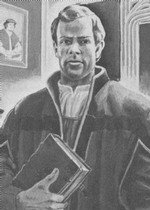
You Think You Have it Rough? Try being a Christian in 1527
Michael Sattler (c. 1490 – May 20, 1527) was a prominent German monk who became an influential, first-generation leader of the Anabaptist movement during the Radical Reformation. He is most famous for his leadership in drafting the Schleitheim Confession, which provided core doctrinal stability to early Anabaptist churches, and for his brutal execution as a Christian martyr.
Early Life and Conversion
- Monastic Background: Born in Staufen, Germany, he joined the Benedictine order and eventually became the prior (second-in-command) of St. Peter's Monastery.
- Scriptural Study: He learned Greek and Hebrew, which allowed him to study the biblical epistles of Paul directly. This research led him to reject Catholic teachings on monasticism and salvation.
- Radical Shift: He left the monastery around 1525 during the German Peasants' War, married a former Beguine nun named Margaretha, and joined the emerging Anabaptists.
Structural Legacy: The Schleitheim Confession
By
1526, the infant Anabaptist movement was splintering due to persecution
and wildly varying theological ideas. In February 1527, Sattler
presided over a secret conference of Swiss Brethren in Schleitheim. He
guided them to ratify the Schleitheim Confession, which defined the
definitive pillars of "free church" theology:
- Believer's Baptism: Rejection of infant baptism in favor of adult baptism.
- The Ban: A system of fraternal accountability and excommunication.
- Strict Pacifism: Complete nonresistance, avoiding the sword, and refusing military involvement.
- Separation from the World: A refusal to take civic oaths or participate in secular government.
Trial and Brutal Martyrdom
Sattler's
radical stance on the separation of church and state drew fierce
pushback from both Roman Catholic and mainstream Protestant authorities.
In May 1527, Austrian Catholic authorities arrested him and his
followers in Horb, Germany.
At
his public trial in Rottenburg am Neckar, Sattler acted as the defense
spokesman. Refusing a lawyer, he deftly used Scripture to answer charges
regarding his rejection of the Catholic mass, infant baptism, and civic
oaths.
He was convicted of heresy and treason. On May 20 (or 21), 1527, he was subjected to a horrific execution:
- His tongue was cut out.
- His flesh was ripped with red-hot iron tongs seven times.
- He was burned alive at the stake.
- Just days later, his wife Margaretha refused to recant and was executed by drowning in the Neckar River.
Sattler's
steadfast composure during torture deeply moved onlookers and
solidified his legacy as a foundational figure for modern peaceful
Anabaptist traditions like the Mennonites, Amish, and Hutterite.
This
is how organized religion handled descent in those days. Now,
Churchianity disfellowships/excommunicates you and destroys your
reputation. They forbid members from any contact with you.
You Are Cordially Invited to share your Christian experience with Renew Your Strength Bible Study Group... https://mlf1070.blogspot.com/
