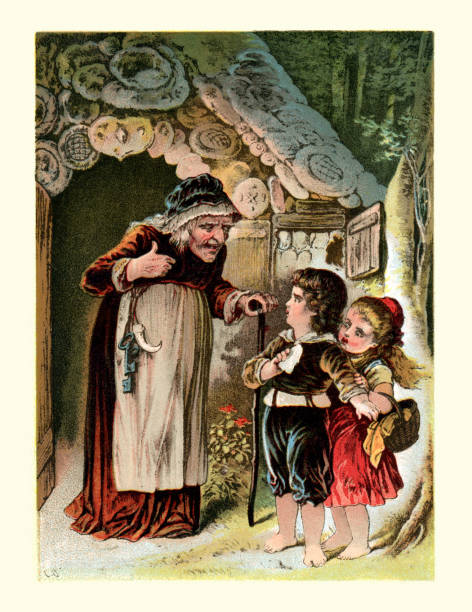
The 12 Tribes of Israel were scattered to the "north and isles of the sea" (Isaiah 11:11).
In a generation or two they completely forgot who they were. Having no
Scriptures and no prophets to guide them, the elders would tell stories
to their grandchildren. One of the stories the Brothers Grimm were able
to record was a tale about two lost children, Hansel and his sister
Gretel.
In this story Hansel represents the 10 Northern Tribes of Israel. Hansel means "God is gracious" or "gift from God," Gretel means "pearl" as in pearl of great prize that represents the Southern Kingdom of Judah - Matthew 13:45-46
"Hansel and Gretel" is a German fairy tale collected by the
Brothers Grimm and published in 1812 as part of Grimms' Fairy Tales.
Hansel and Gretel are siblings who are abandoned in a forest and fall
into the hands of a witch who lives in a house made of bread, cake, and
sugar.
Hansel and Gretel
is a classic fairy tale about two poor siblings who outsmart an evil
witch living in a house made of sweets. Facing starvation, the children
are abandoned in the woods, find a candy house, defeat their captor, and
return home rich.
The Abandonment in the Woods
- Poverty and the Stepmother: A poor woodcutter and his second wife face a severe famine. The cruel stepmother convinces her weak husband to lose the children in the deep forest so they will not all starve.
- The First Attempt: Hansel and Gretel overhear the plot. Hansel sneaks out to fill his pockets with shiny white pebbles. The next day, he drops them along the path, allowing the children to follow the moonlight and safely return home.
- The Second Attempt:Locked inside the house next time, Hansel cannot gather pebbles and instead drops breadcrumbs. When they are left in the forest again, hungry birds eat the crumb trail, leaving Hansel and Gretel truly lost.
The Gingerbread House and the Witch
- Finding the House: After wandering for days, the starving children find a cottage made entirely of bread, cake, and sugar, with windows of clear sugar.
- The Trap: An old woman invites them in with sweet food, but she is actually a wicked, cannibalistic witch with red eyes who traps children to cook and eat them.
- Imprisonment: The witch locks Hansel in a tiny cage to fatten him up and forces Gretel to do chores. Each day she asks Hansel to stick out his finger to feel if he is fat yet. Hansel tricks her poor eyesight by holding out a thin chicken bone instead.
The Escape and Return Home
- Defeating the Witch: Growing impatient, the witch decides to bake Hansel anyway. She heats her large oven and tells Gretel to check if the fire is hot. Gretel pretends she does not know how, tricking the witch into leaning close to the opening.
- Freedom and Treasure: Gretel quickly shoves the witch into the oven and slams the iron door shut, burning her to death. Gretel frees Hansel, and they fill their pockets with the witch's pearls and diamonds.
- Happy Reunion: Crossing a body of water with the help of a friendly duck or swan, they reach home to find the cruel stepmother has died. Their overjoyed father embraces them, and their newfound wealth ensures they never suffer hunger again.
The
story of Hansel and Gretel parallels the biblical narrative of the Fall
of Man, the temptation in the wilderness, and ultimate redemption. Here
is a biblical analogy of the classic fairy tale.
The Wilderness of Sin
Hansel
and Gretel are cast out into a dark, unforgiving forest because of
famine and a scarcity of bread. This mirrors humanity’s exile from the
Garden of Eden into a fallen world full of spiritual famine, thorns, and
hardships. The children represent humanity—vulnerable, lost, and
separated from the safety of their true home.
The White Pebbles and the Fallen Crumbs
To
find their way back, Hansel relies on his own wisdom, dropping white
stones that shine in the moonlight. These stones represent the Law or
the prophets—divine markers provided to guide lost souls through the
darkness. However, when the children rely on breadcrumbs during their
second abandonment, the birds of the air devour them. This reflects
Jesus' Parable of the Sower, where the wicked one comes and snatches
away the word sown in the heart, leaving humanity entirely lost in the
wilderness of sin.
The House of Temptation
Deep
in the forest, the children discover a house made of bread, cake, and
sugar. This is the ultimate deception of the Enemy, echoing Satan’s
temptation of Eve in Eden and Jesus in the wilderness. The witch’s house
appeals directly to the "lust of the flesh, the lust of the eyes, and
the pride of life." It promises immediate satisfaction for their
physical hunger but masks a deadly trap.
The Witch as the Deceiver
The
old witch embodies Satan, transforming herself into an angel of light
by offering hospitality and comfort, only to reveal her true nature as a
roaring lion seeking whom she may devour. She imprisons Hansel to
fatten him up, symbolizing how sin enslaves the human spirit and
prepares it for destruction. Hansel’s blindness and reliance on a dry
bone to trick the witch represents humanity's spiritual blindness under
the captivity of sin, saved only by a deceptive semblance of death.
The Trial by Fire and Divine Deliverance
The
climax takes place at the oven, a biblical symbol of judgment, trial,
and refinement. Gretel, initially the weaker sibling, undergoes a
spiritual awakening. Utilizing divine wisdom rather than physical
strength, she thwarts the enemy and pushes the witch into her own fiery
furnace—paralleling how evil ultimately consumes itself and how the lake
of fire awaits the great Deceiver.
The Return Home with Riches
Having
conquered the enemy, the children find the witch's house filled with
pearls and precious stones. They cross a great body of water with the
help of a white duck—reminiscent of Noah’s dove or the parting of the
Red Sea—signifying baptism and safe passage from death to life. They
return to their father, who welcomes them with open arms, having grieved
their absence. This final reunion mirrors the ultimate restoration of
humanity to God the Father, returning from the wilderness of the world
clothed in the riches of righteousness.
Learn more about how God uses even fairy tales to show His love for His children. You Are Cordially Invited to Renew Your Strength Bible Study Group... https://mlf1070.blogspot.com/
